Pigment is a leading alternative for strategic planning

Anaplan
Pigment natively integrates with over 30 business applications (ERP, CRM, HRIS, BI solutions and more).
Native integrations are limited to fewer than 10 business applications using the Anaplan Data Orchestrator.
Pigment is a natively sparse engine and workspaces are not limited in capacity.
Standard Workspace size is limited, and additional products may be purchased to manage larger volumes of data up to a limit of 720GB.
Data is shared across business functions without needing to manage imports between models.
Data imports must be set up and maintained to copy data across multiple models.
Data updates happen automatically, without end users needing to trigger a data refresh for real-time planning and visibility of changes.
End users must refresh their pages to see the effect of data updates by other users while working in the same model.
Data inputs can be made by end users while imports and data recalculations are in progress.
End users are prevented from making changes to the model while data imports, exports and susbtantial recalculations are in progress.
How to forecast and control your AI Spend with Pigment.
AI adoption is scaling faster than most companies can financially govern it. As teams move from experimentation to embedding AI models, coding tools, and agents into daily workflows, AI is becoming a new and unpredictable cost center.
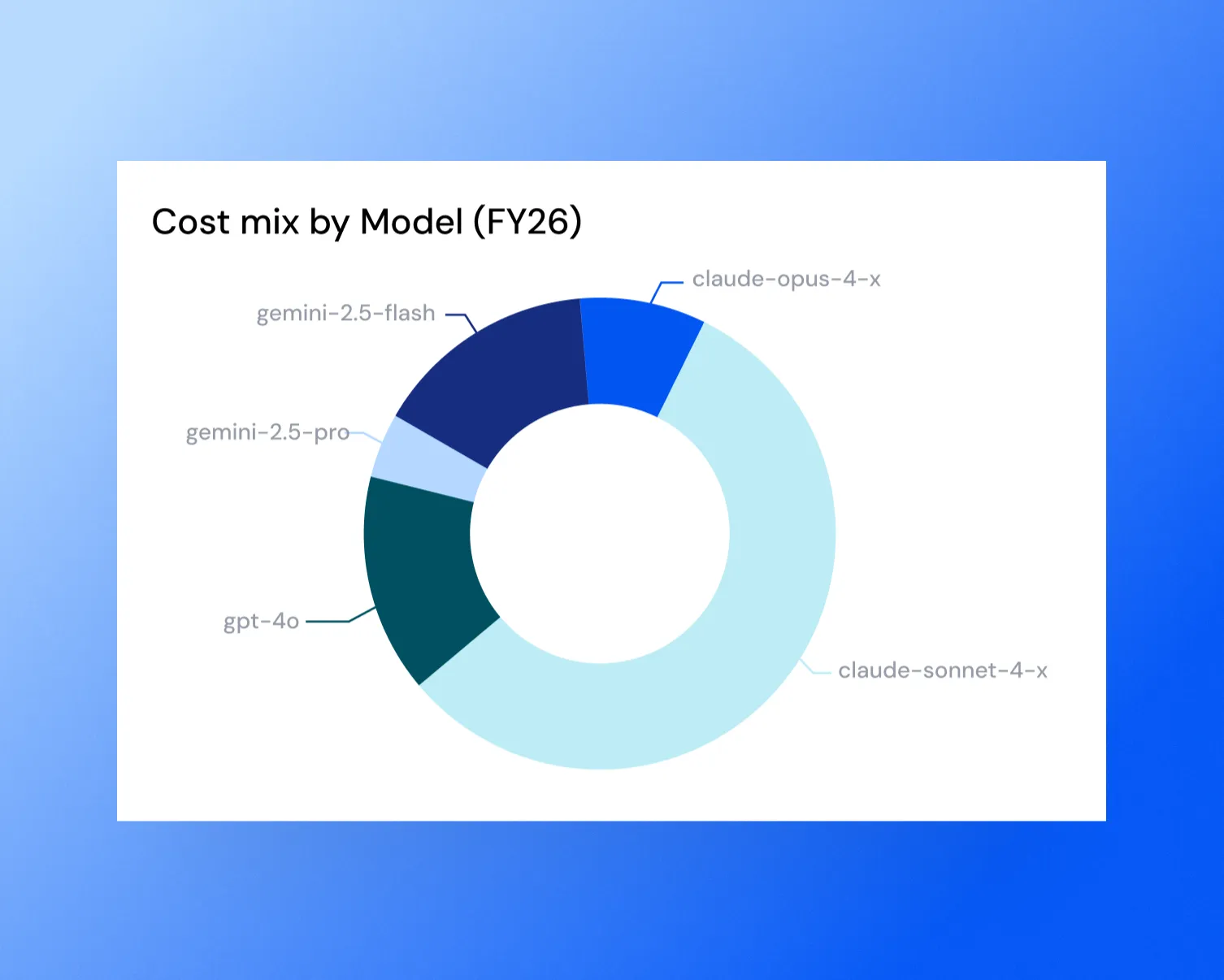
Join this product demo to see how Pigment’s AI Investment Planner helps organizations move beyond fragmented cost tracking and start managing AI spend as a business investment. You’ll see how teams can monitor consumption, forecast future costs, govern new AI initiatives, detect anomalies, and measure ROI by use case — all in one connected planning model.
In this session, we’ll cover how to:
- Build a centralized view of AI spend across providers, models, teams, projects, workflows, and use cases
- Forecast future AI costs based on usage trends, adoption assumptions, model mix, and planned initiatives
- Compare budget vs. actuals and allocate AI costs to the right teams, cost centers, projects, or initiatives
- Route new AI use cases through approval workflows across business, Procurement, IT, Finance, and leadership
- Prove ROI by use case and decide what to scale, optimize, or stop, based on cost, impact and return
